
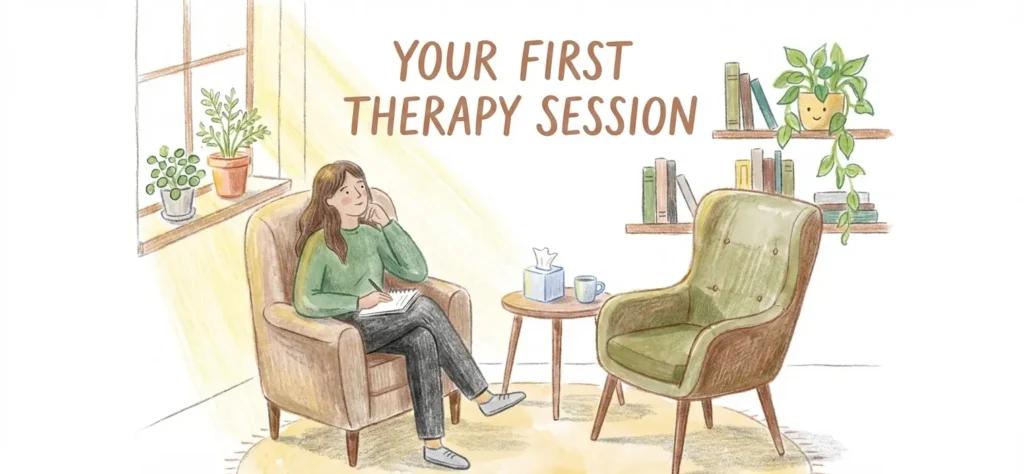
Starting therapy can feel confusing, intimidating, or even overwhelming, especially if you’ve never done it before. Many people in India begin therapy with questions they hesitate to ask out loud.
Is this normal?
How long will it take?
What if I don’t feel better immediately?
This guide is written for first-time therapy clients in India. It explains what therapy usually looks like, what you can realistically expect, and what is completely normal to experience along the way.
Before Your First Therapy Session
You don’t need to prepare perfectly before starting therapy.
Many people worry they should know exactly what’s wrong or what they want to work on. That isn’t necessary. Therapy often helps you figure that out, not present it neatly.
Before your first session, it may help to reflect on:
- What made you consider therapy at this point in your life
- Emotions, situations, or patterns that feel difficult or stuck
- Any recent changes, losses, or stressors
Even if all you know is that something feels off, that is enough to begin.
What Happens in the First Therapy Session
The first therapy session is not about solving everything.
Your therapist will usually focus on:
- Understanding your background and current concerns
- Learning how you experience your emotions and relationships
- Building a sense of safety and trust
You may find yourself talking more than you expected. Some questions may feel basic or repetitive. This is intentional. Your therapist is listening for patterns, not judging your answers.
If the session feels slow or uneventful, that does not mean it was unhelpful. Early sessions are about understanding, not quick fixes.
What Not to Expect from the First Session
It helps to know what therapy usually does not look like at the start.
You should not expect:
- Instant solutions or life advice
- A clear diagnosis in one session
- Your therapist telling you exactly what to do
Therapy is a collaborative process. Your therapist supports insight and understanding. You remain in control of decisions.
Why Therapy Often Feels Slow in the Beginning
People are shaped by years of experiences, relationships, culture, and coping mechanisms. Understanding that cannot happen in one hour.
In the first few sessions, you may:
- Talk about childhood, family, or education
- Discuss current stress, work pressure, or relationship concerns
- Realise there are multiple areas you want to work on
This foundation-building phase is essential. It helps ensure therapy is thoughtful, ethical, and actually useful for your real life.
When Will I Start Seeing Results from Therapy?
This is one of the most common questions clients ask.
Progress in therapy is rarely immediate or linear. Some sessions may feel relieving. Others may feel emotionally heavy or confusing.
For many people:
- Small shifts appear after a few sessions
- Noticeable change often takes 6 to 8 sessions or longer
Progress depends on many factors, including your goals, consistency, and how safe the space feels for you.
What If I Feel Worse Before I Feel Better?
This can be a normal part of therapy.
Talking about difficult experiences or emotions you’ve avoided can temporarily increase discomfort. Feeling more emotional does not mean therapy is harming you.
If sessions start to feel overwhelming, tell your therapist. Therapy can and should be paced in a way that feels manageable.
What If I Don’t Feel Comfortable with My Therapist?
Feeling slightly awkward at first is common. Opening up takes time.
It’s usually recommended to attend at least two to three sessions before deciding whether therapy isn’t working for you.
If you still don’t feel comfortable after that, it is okay to explore other options. The right therapeutic fit matters.
If you are using Emotist, our team can support you in finding a therapist who may suit your needs better.
Common Therapy Myths (Especially in India)
Myth: A therapist will tell me what to do.
Reality: Therapy is collaborative. You decide what changes to make. Your therapist helps you understand yourself more clearly.
Myth: Therapy should fix things quickly.
Reality: Some concerns improve faster than others. Slow progress does not mean failure.
Myth: I should feel better after every session.
Reality: Some sessions bring relief. Others bring discomfort. Both can be part of real progress.
Myth: If therapy is working, I don’t need to think about it between sessions.
Reality: Reflection, awareness, and small changes outside sessions often support growth.
What If Therapy Starts to Feel Directionless?
It is okay to ask questions.
You can:
- Share how sessions feel for you
- Ask about goals or focus areas
- Check in on progress after a few weeks
Therapy works best when it remains an open, two-way conversation.
A Final Word
Therapy is not a quick solution or a sign of weakness.
It is a structured space to understand yourself better, especially in a world that rarely gives us time to pause.
If you’re considering therapy in India and still have questions, Emotist is here to help you navigate the process with clarity and care.
