
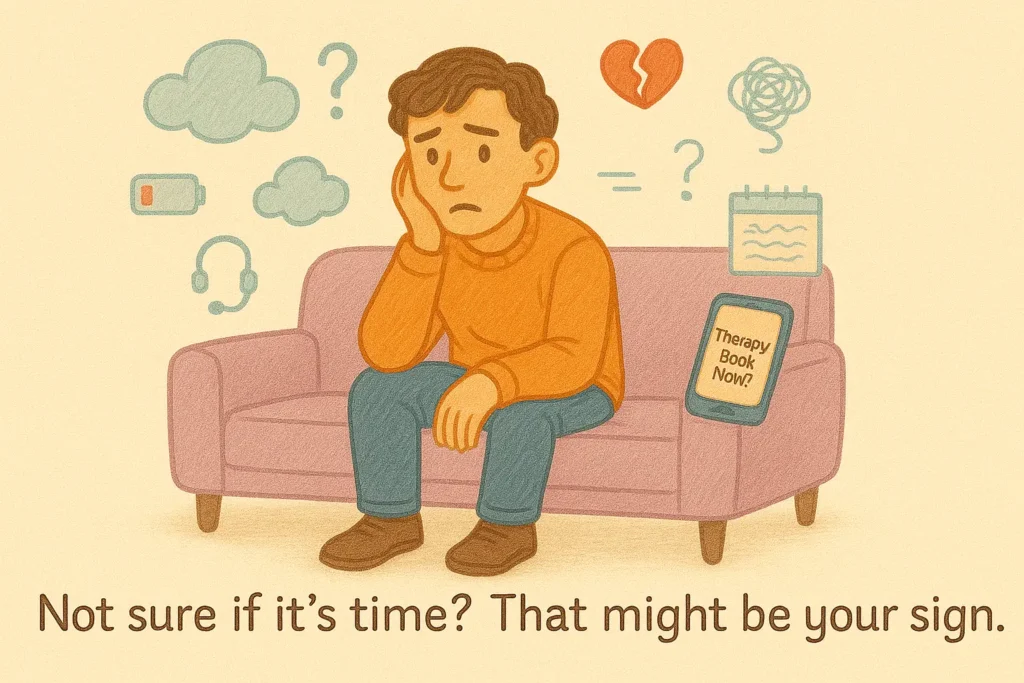
Thinking about therapy can feel like a big step, and it’s perfectly normal to wonder if it’s really necessary. You might find yourself asking questions like, “Am I struggling enough to need therapy?” or “Isn’t everyone going through this to some extent?” But the truth is, your mental health matters just as much as your physical health. Seeking help is not a sign of weakness, it’s a courageous choice to prioritize your well-being.
So, how do you know when it’s the right time to talk to a therapist? Here are some signs that it might be time to take that first step toward professional help. And trust me, you’re not alone in feeling unsure. Reaching out for support can make all the difference.
Emotions Are Overwhelming You
When emotions seem to take over your life, and you can’t quite get a grip on them, it might be time to reach out. You might feel angry, anxious, sad, or just… off, all the time. When emotions are in the driver’s seat, it’s hard to find your balance. A therapist can help you unpack those emotions and guide you toward healthier ways of managing them. Imagine having a safe space where you can be truly heard, without judgment.
Relationships Are Feeling Strained
Whether it’s with family, friends, or a partner, when relationships start feeling like more of a burden than a source of support, it’s a clear sign something’s off. Communication might break down, conflicts might escalate, or you might start feeling distant from those you care about. Therapy isn’t just about addressing personal issues; it’s about improving how you connect with others. It can help you rebuild trust, communicate more effectively, and restore the intimacy and understanding that’s been lost along the way.
Constant Stress or Anxiety Is Taking Its Toll
We all experience stress and anxiety, but when it becomes constant, draining, and starts impacting your daily routine, it’s a different story. Feeling perpetually on edge, overthinking everything, or avoiding situations because of anxiety isn’t sustainable. Therapy can help you explore the root of your anxiety and provide you with tools to manage it better. You don’t have to let anxiety control your life, therapy can help you find peace of mind again.
You Can’t Shake Those Mood Swings
One moment you feel on top of the world, and the next, you’re spiraling into despair. If your mood swings feel unpredictable and out of control, it’s more than just having a bad day. These fluctuations might point to deeper issues like depression or bipolar disorder. A therapist can help you explore the causes behind these shifts and work toward emotional stability.
You’re Engaging in Harmful Habits
Turning to substances, unhealthy eating habits, self-harm, or any form of escapism to cope with emotions is a serious red flag. These behaviors often signal that something deeper is going on. Therapy can help you uncover the triggers behind these habits and offer healthier ways to cope. You deserve to break free from these cycles, and a therapist can help guide you in the right direction.
Trouble Focusing or Sleeping? It’s More Than Just a Phase
We’ve all had nights where we can’t sleep or days when we can’t focus. But if these patterns persist, they could be a sign of something deeper, like anxiety or depression. If you’re tossing and turning at night or struggling to concentrate during the day, it’s time to take action. A therapist can help you address these issues, restore your sleep, and bring clarity back to your waking hours.
You’ve Tried Everything, But Nothing’s Working
You’ve Googled solutions, talked to friends, tried every self-help technique you can think of, and still, you feel stuck. If nothing seems to make a difference, it might be time to talk to a professional. Therapy offers a fresh perspective, new tools, and personalized support that goes beyond what you can find on a website or get from a well-meaning friend. Sometimes, therapy is the missing piece to help you start healing.
Life Changes Are Shaking You to the Core
Big life changes, whether it’s losing someone close to you, going through a breakup, dealing with a major career shift, or even moving to a new place, can feel like they’ve turned your world upside down. If you’re struggling to adjust or feeling overwhelmed by grief or stress, therapy can help you process those emotions. It provides a space to grieve, heal, and regain your emotional strength during times of transition.
You Just Don’t Feel Like Yourself Anymore
Have you noticed that you’re no longer the person you once were? Maybe things that used to excite you no longer spark joy, or you feel disconnected from life itself. This sense of not being yourself is often tied to mental health challenges like depression or burnout. Therapy can help you navigate this fog, rediscover your passions, and rebuild your confidence.
You Want to Improve, Not Just Survive
Therapy isn’t only for moments of crisis. It’s also for personal growth. If you’re looking to gain more self-awareness, set goals, and live a more fulfilling life, therapy can guide you on that journey. It’s not just about getting by, it’s about thriving. Therapy can help you build a life that aligns with your values and aspirations.
Taking the First Step
Acknowledging that you need help is often the hardest part. But recognizing any of these signs is the first step toward feeling better. Therapy offers a safe, non-judgmental space where you can process your emotions, gain clarity, and develop strategies for dealing with life’s challenges. No matter what you’re going through, professionals are there to help you regain your balance, discover healthier coping mechanisms, and ultimately, live a more fulfilling life.
If any of these signs resonate with you, don’t wait. Reaching out for help is one of the most empowering things you can do for yourself. Therapy can be a powerful tool for healing, growth, and getting back to being your best self. You deserve the support. Take that first step, you’re not alone.
